 By Robert Brendler · 2026-09-26
The Silence of the First Interview
Summary
AI video interviews are becoming the first point of contact for many job seekers, yet their opacity undermines candidate confidence and employer attractiveness. Research indicates that without clear feedback or transparency, these automated assessments create a dual challenge for both applicants and organizations.
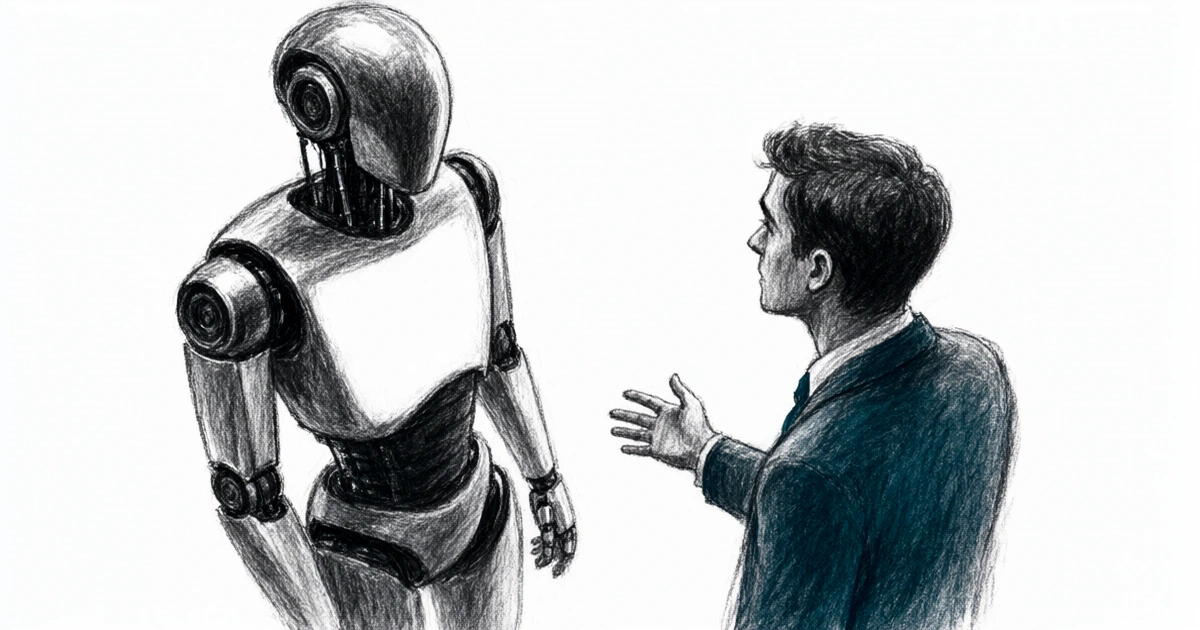
An AI video interview often constitutes the first contact a university student has with a prospective employer, occurring before any human interaction takes place1. In this setting, applicants record responses to standardized prompts while an AI system analyzes verbal content, vocal features, and facial expressions to generate assessments1. The evaluation criteria are often opaque, feedback is absent, and the basis of assessment remains unclear1.
The Confidence Gap
This opacity creates a specific problem for students’ career development1. Without clear evaluation standards, applicants struggle to assess their own readiness, which undermines their confidence in their employability1. A study of 520 Chinese university students found that four expectancy-related factors—AI literacy, metacognition, need for cognition, and technology anxiety—are independently associated with perceived employability1. When these factors are not supported by the interview process, the candidate’s self-appraisal suffers1.
The Attractiveness Cost
The impact extends beyond the individual candidate1. Applicants routinely use selection procedures as signals of organizational attributes1. When the process lacks procedural justice and algorithmic transparency, organizational attractiveness is substantially weakened1. The study confirms that these two value-related process perceptions are key drivers of how candidates view the hiring company1. AI usage experience and social comparison orientation further moderate these relationships, meaning candidates who are more experienced with AI or more prone to comparing themselves to others react differently to the lack of transparency1.
Industry Context
The scale of this issue is growing. Industry surveys indicate that AI adoption in hiring nearly doubled in a single year, rising from 26% to 43% of organizations worldwide1. An estimated 99% of Fortune 500 companies now incorporate some form of AI into their recruitment processes1. Unlike traditional interviews, where candidates can read interpersonal cues and adapt in real time, AI video interviews are largely one-directional1. This structural difference means that the first impression an employer makes is often a silent, automated one that fails to convey fairness or clarity1.
Before you act on it
Transparency in AI screening is not just an ethical nicety; it is a direct driver of candidate confidence and employer attractiveness.
Sources
- When algorithms evaluate people: how AI video interviews relate to employability confidence and organizational attractiveness (Frontiers in Psychology, 2026-09-25)